Analyzing Tokenization Rollout Sequences and Their Effects on Recurring Billing Stability in Digital Subscription Ecosystems
Written by Alex Richter · Oct 20, 2026
Analyzing Tokenization Rollout Sequences and Their Effects on Recurring Billing Stability in Digital Subscription Ecosystems
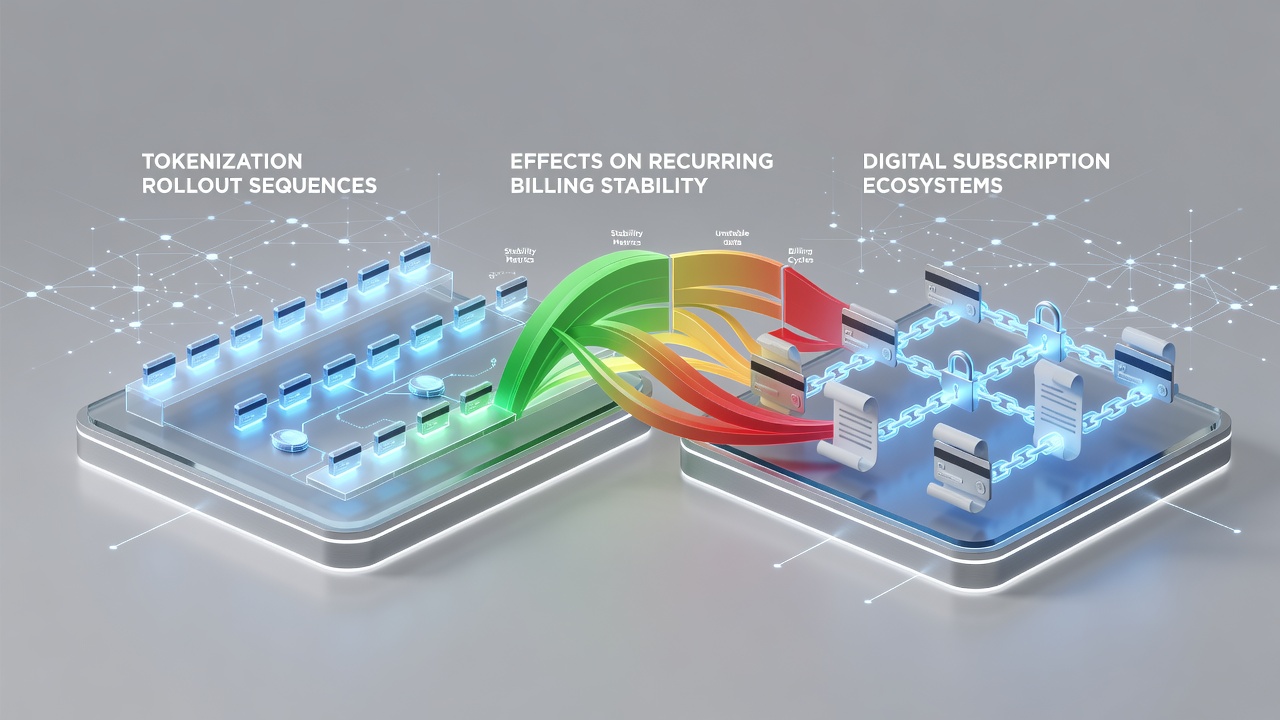
Tokenization replaces sensitive payment card details with unique tokens during subscription setups, and rollout sequences determine how quickly merchants integrate these systems without disrupting ongoing billing cycles. Observers note that phased implementations often begin with low-volume customer segments before expanding to full user bases, which allows teams to monitor authorization rates and adjust API calls in real time. Data from payment networks indicates that sequential token migrations completed by October 2026 reduced failed recurring charges by measurable margins across multiple digital platforms. Experts track these sequences through distinct stages that include initial token generation, mapping to existing customer profiles, and final activation of billing triggers. Research indicates that organizations adopting staggered rollouts over six to nine months experienced fewer interruptions compared to simultaneous deployments. The process connects directly to recurring billing stability because each token must align with stored subscription parameters such as billing dates and amount variations. Those who study subscription ecosystems report that early-stage testing of token validation routines reveals patterns in decline codes that later influence retry logic. According to the PCI Security Standards Council, proper sequencing minimizes exposure windows during the transition from card-on-file methods to tokenized storage.Phased Implementation Approaches in Subscription Platforms
Companies typically structure tokenization rollouts into sequential waves that target specific cohorts based on subscription tenure or geographic region. Analysts observe that the first wave often covers new sign-ups while legacy accounts remain on older processing paths until subsequent phases activate. This approach preserves continuity in payment flows and prevents sudden spikes in churn triggered by authorization failures.
Further along the sequence, integration teams map historical transaction data to new tokens while maintaining fallback mechanisms for edge cases. Figures reveal that by October 2026 many platforms had completed at least two full rollout cycles, leading to more predictable revenue recognition in monthly recurring revenue reports. The sequencing also incorporates compliance checkpoints that verify token uniqueness and scope before broader activation occurs.
Impact on Authorization Rates and Billing Continuity
Tokenization sequences influence recurring billing stability through changes in how issuers validate subsequent charges. When tokens replace full card numbers early in the cycle, merchants encounter fewer declines stemming from expired or updated card details. Studies show that platforms completing full token migration reported authorization success rates climbing steadily over successive quarters.
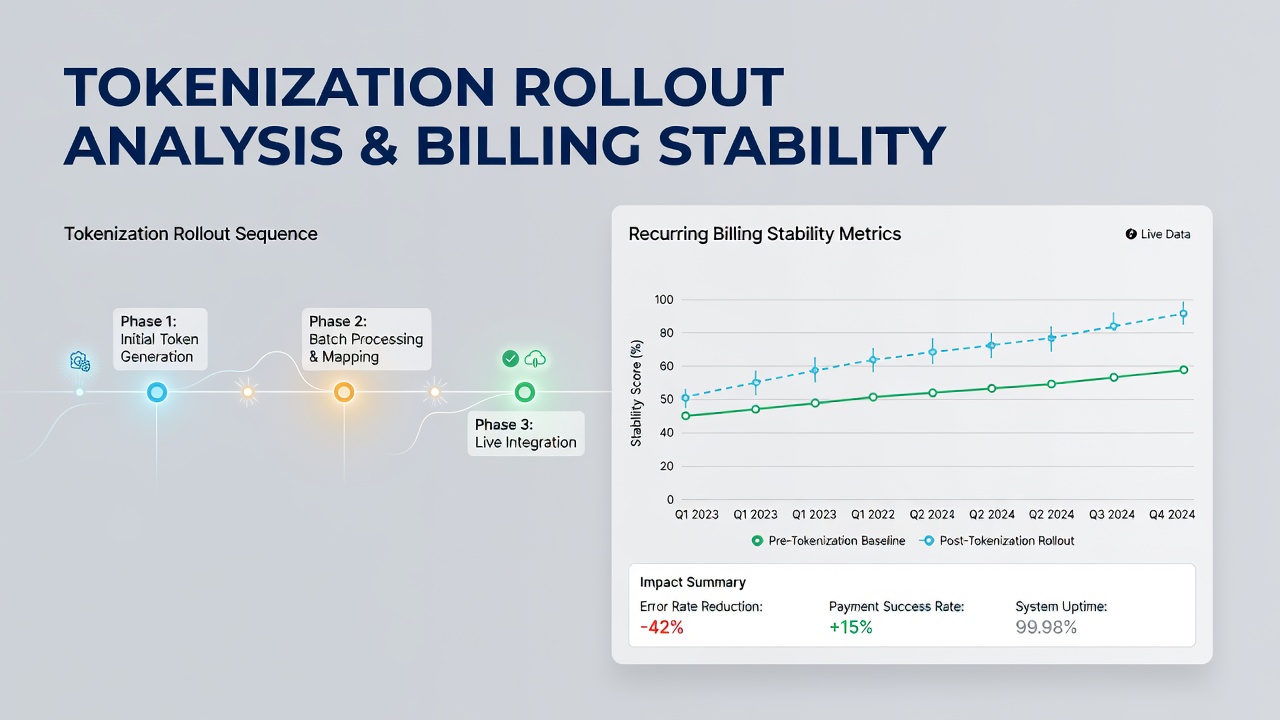
Those monitoring ecosystem data note that retry mechanisms tied to tokenized transactions handle soft declines more effectively because updated network tokens carry additional metadata about card status. The result appears in reduced involuntary churn, particularly for services with monthly or quarterly billing intervals. Evidence suggests that misalignment between rollout timing and billing calendar dates can create temporary gaps, yet organizations that synchronized these elements achieved smoother transitions.
Operational Patterns Observed Across Digital Ecosystems
Patterns emerge when rollout sequences align with seasonal subscription peaks, such as post-holiday renewals or annual plan resets. Observers document that platforms coordinating token deployment ahead of these periods maintained higher retention metrics. The connection between sequence timing and billing stability becomes evident in the volume of customer support tickets related to payment failures during transition windows.
According to reports from the Bank for International Settlements, global payment networks recorded incremental improvements in recurring transaction success following widespread token adoption through structured rollouts. These improvements trace back to reduced reliance on static card credentials that become obsolete over time.
Conclusion
Tokenization rollout sequences shape recurring billing stability by establishing controlled pathways for replacing sensitive data while preserving authorization continuity. Organizations that follow measured, phased approaches consistently record steadier performance in subscription metrics. The patterns identified through 2026 implementations provide a factual basis for refining future deployment strategies across digital subscription ecosystems.