Charting how customer assistance protocols steer security rollout variations across credit card networks for expanding digital storefronts
Written by Sam Coleman · Nov 3, 2026
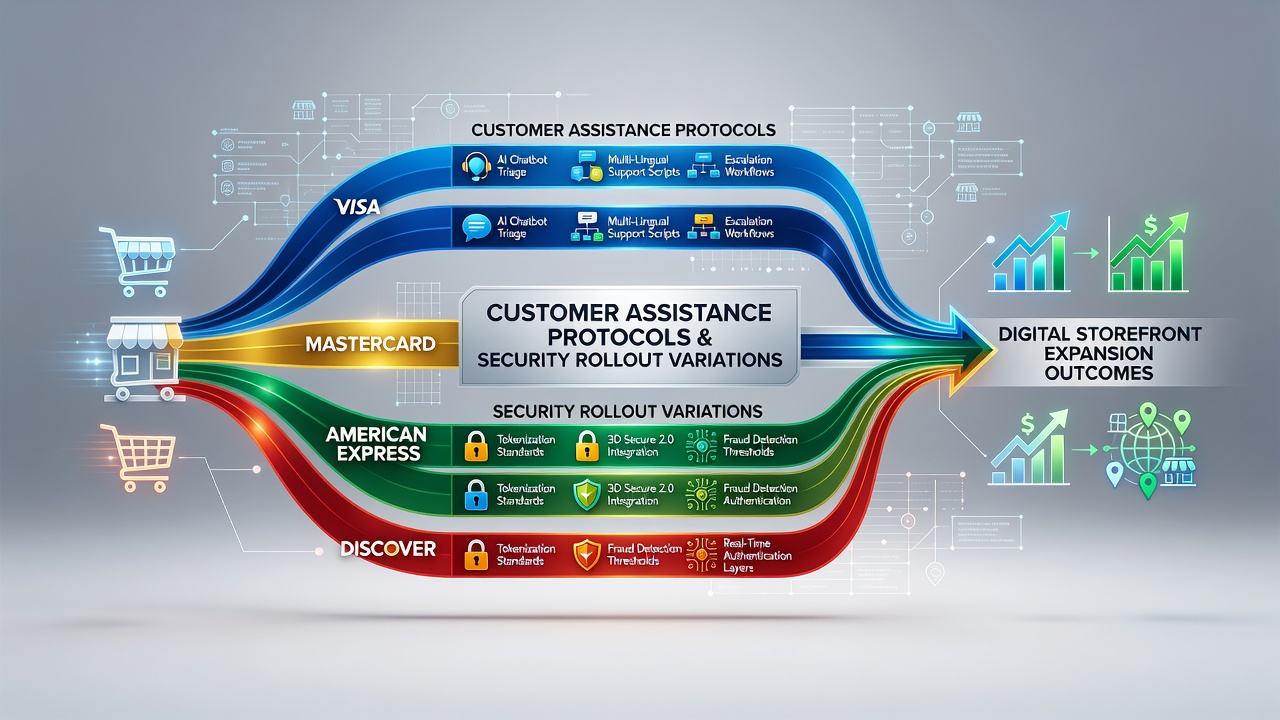
Charting how customer assistance protocols steer security rollout variations across credit card networks for expanding digital storefronts
Customer assistance protocols within credit card networks shape how security measures reach merchants operating expanding digital storefronts, and data from network operators shows these support structures create distinct rollout patterns across Visa, Mastercard, and American Express systems. Merchants scaling online operations encounter variations because assistance teams prioritize different training sequences, compliance checkpoints, and integration timelines depending on the network involved.
Support Structures and Their Influence on Security Timing
Assistance protocols begin with initial merchant onboarding calls where representatives walk through required security layers such as EMV 3-D Secure enrollment and encryption key management. Research from payment industry analyses indicates that networks with centralized support desks tend to accelerate initial security configurations for mid-sized digital storefronts, whereas decentralized models distribute guidance across regional teams and extend the process by several weeks. In November 2026, several networks adjusted their assistance workflows to incorporate automated compliance dashboards, which altered how quickly new merchants could activate layered authentication without manual follow-ups.
Those who manage assistance programs observe that query resolution speed directly affects when merchants implement network-specific mandates. For instance, Visa-affiliated support channels often route technical queries through dedicated security specialists early in the expansion phase, which compresses the window between account approval and full 3-D Secure activation. Mastercard assistance flows, by contrast, frequently bundle security guidance with broader reporting tool training, stretching the rollout across multiple sessions. American Express protocols emphasize direct merchant-to-network contact for high-volume storefronts, producing shorter but more intensive assistance cycles.
Network-Specific Variations in Rollout Sequences
Security feature deployment differs because each network maintains separate assistance templates that guide merchants through certification steps. Visa networks require sequential validation of tokenization services before broader fraud tool access opens, and support staff enforce this order through scheduled check-ins. Mastercard assistance documentation lists parallel tracks where merchants can test encryption alongside payout reconciliation features, resulting in staggered but concurrent security activations. American Express protocols tie security milestones to volume thresholds, so expanding storefronts receive phased assistance that scales with transaction counts.
Observers tracking these patterns note that assistance volume spikes correlate with regulatory updates. When the European Central Bank released revised payment security guidelines in late 2025, support teams across networks adapted their scripts, yet the timing of merchant notifications varied by up to four weeks depending on the network's internal routing rules. European Central Bank documentation outlines how these guideline shifts prompted networks to modify assistance priorities without altering core technical requirements.
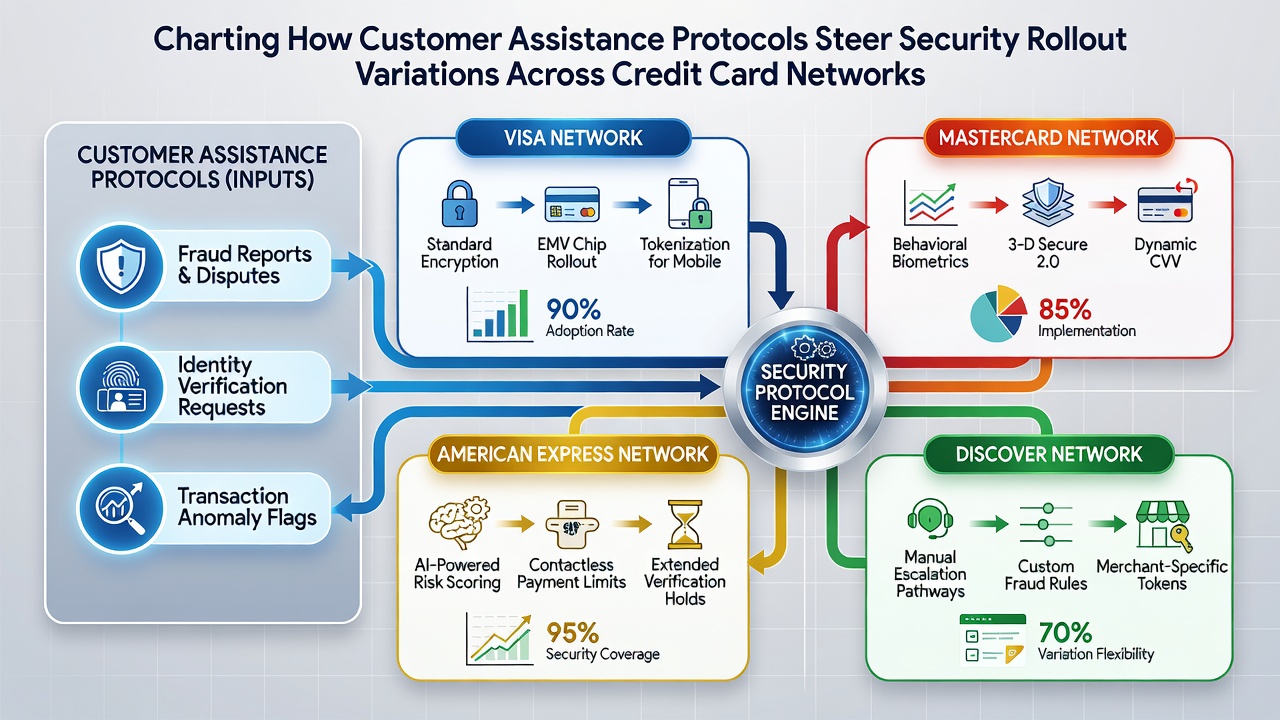
Effects on Expanding Digital Storefront Operations
Digital storefront operators expanding into new regions encounter these protocol differences most acutely during multi-network integration. Assistance teams supply region-specific checklists that determine whether token service providers must be onboarded before or after certain encryption standards activate. Storefronts handling cross-border sales report that Visa support protocols often front-load documentation for PCI DSS scope reviews, which shortens the overall security enablement period for high-growth merchants. Mastercard teams, however, integrate those reviews into ongoing quarterly calls, spreading the workload.
Federal Reserve payment system studies reveal measurable differences in adoption rates tied to assistance models. Networks providing proactive outreach rather than reactive query handling saw faster merchant uptake of updated authentication protocols during 2025 expansion cycles. Federal Reserve payment systems reports track how support interaction frequency influences the interval between network approval and live security feature usage.
Case Patterns Across Merchant Segments
One analysis of mid-sized digital storefronts showed that those routed through specialized assistance queues completed security rollouts an average of 11 days earlier than peers using general support lines. The difference emerged because specialized teams supplied pre-configured templates aligned with each network's current certification checklist. Larger enterprises expanding multiple storefronts simultaneously encountered fewer timing discrepancies because they maintained dedicated account managers who coordinated across networks from a single point of contact.
Smaller operators scaling from single-site to multi-channel setups experienced the widest variation. Assistance protocols for these merchants often default to self-service portals supplemented by scheduled webinars, and the frequency of those webinars differed by network during the 2026 calendar year. Networks that increased webinar cadence in response to seasonal sales spikes enabled faster security alignment for seasonal digital storefronts.
Conclusion
Customer assistance protocols continue to steer security rollout variations because each credit card network maintains distinct support pathways that align technical requirements with merchant operational timelines. Data from regulatory and industry sources confirms these pathways produce measurable differences in activation speed and sequencing across expanding digital storefronts. As networks refine their assistance models through 2026 and beyond, merchants gain clearer visibility into the timelines that govern security feature availability on each system.