Deciphering How Encryption Protocols Shape Authorization Timing Across Subscription Billing Cycles in Global Digital Marketplaces
Written by Clara Koch · Nov 17, 2026
Deciphering How Encryption Protocols Shape Authorization Timing Across Subscription Billing Cycles in Global Digital Marketplaces
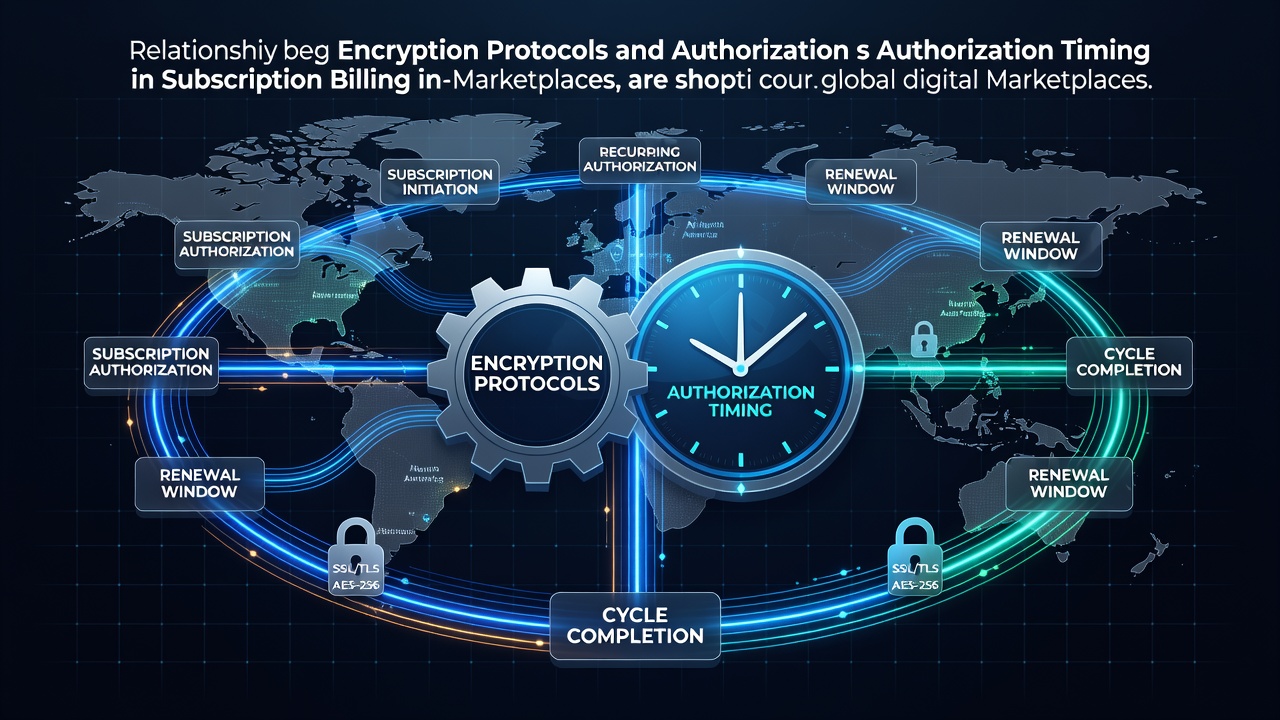
Encryption protocols serve as foundational elements in securing payment data during authorization processes, and they directly influence the duration required to validate transactions within subscription billing cycles that operate across international digital marketplaces. Researchers have documented how variations in protocol strength and implementation create measurable differences in processing latency, particularly when recurring charges trigger repeated verification steps through distributed networks.
Core Mechanisms of Encryption in Payment Authorizations
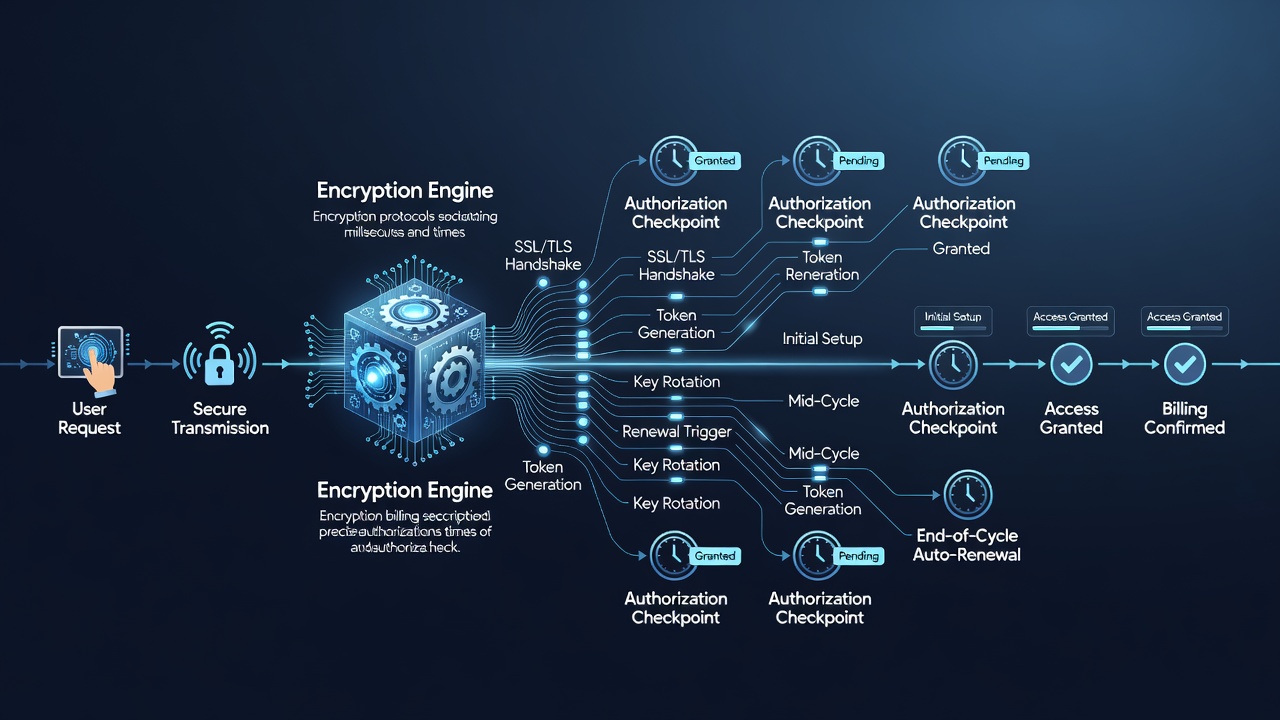
Payment systems rely on standards such as TLS 1.3 and AES-256 to encrypt cardholder data before it travels between merchant servers and acquirer gateways, yet the computational overhead of key exchanges and cipher negotiations adds fractional seconds to each authorization request. Studies from the National Institute of Standards and Technology indicate that handshake durations under TLS 1.3 average 20 to 30 percent shorter than those under earlier versions, which matters when platforms process thousands of subscription renewals in a single billing window. Observers note that symmetric encryption algorithms handle bulk data efficiently once keys are established, whereas asymmetric components used for initial authentication introduce variable delays based on key length and server load.
Tokenization layers often sit atop these protocols, replacing sensitive account numbers with temporary tokens that still require encrypted transmission, and this combination compounds timing effects during high-volume renewal periods. Data from industry reports shows that marketplaces handling multi-currency subscriptions experience additional latency when regional certificate authorities enforce distinct cipher suites to meet local compliance rules.
Effects on Recurring Billing Schedules
Subscription platforms schedule authorizations at fixed intervals, and any encryption-induced delay can shift settlement windows, which in turn affects when merchants receive funds and when customers see charges reflected in their statements. In systems where batch processing occurs overnight, accumulated milliseconds from each encrypted transaction scale into minutes or hours across large customer bases, prompting adjustments in retry logic for failed authorizations. Those who manage digital storefronts report that protocols requiring perfect forward secrecy extend initial connection times, yet they reduce risks associated with long-term key compromise during ongoing billing cycles.
Global operators must account for cross-border data routing, where encryption handshakes traverse multiple jurisdictions and encounter varying regulatory requirements on minimum key strengths. By November 2026, updates to international standards are expected to standardize certain post-quantum cryptography elements, which may further alter these timing profiles in subscription ecosystems that span North America, Europe, and Asia-Pacific regions.
Regional Regulatory Influences and Timing Variations
European frameworks emphasize data minimization alongside encryption, leading some gateways to implement shorter session timeouts that force more frequent re-authentications during billing cycles. Canadian and Australian regulatory bodies have issued guidelines that prioritize interoperability with existing TLS implementations, resulting in authorization sequences that complete faster than those in markets with stricter cipher restrictions. Evidence from payment network analyses reveals that merchants operating in multiple regions often deploy adaptive protocol stacks to balance security mandates with the need for consistent renewal timing across their subscriber base.
One study examining transaction logs from large digital marketplaces found that AES-GCM implementations reduced average authorization times by 15 milliseconds compared with CBC modes, a difference that becomes statistically significant when aggregated over millions of recurring payments. These findings align with observations from the NIST cryptographic standards documentation, which details performance characteristics of authenticated encryption modes used in payment environments.
Practical Implications for Marketplace Operations
Platform engineers configure load balancers and API endpoints to prioritize cipher suites that minimize handshake overhead while satisfying PCI DSS requirements for data protection. When subscription volumes spike during promotional periods, the cumulative effect of encryption delays can push some authorizations outside the intended billing window, triggering customer notifications and potential churn. Operators therefore monitor real-time metrics on protocol performance and adjust configurations to maintain synchronization between verification layers and payout scheduling.
Research published by the European Union Agency for Cybersecurity highlights how protocol selection influences both security posture and operational throughput in cloud-based billing systems serving global audiences. Merchants who integrate these insights into their infrastructure planning achieve more predictable authorization windows across diverse regulatory landscapes.
Conclusion
Encryption protocols determine authorization timing through their impact on handshake efficiency, cipher performance, and compliance-driven configurations, and these factors collectively shape the reliability of subscription billing cycles in worldwide digital marketplaces. Continued evolution of standards through 2026 will require ongoing measurement and adaptation by payment processors and platform operators to sustain consistent renewal experiences.