Decoding Synchronization Hurdles Between Verification Layers and Payout Scheduling Across Subscription-Based Retail Networks
Written by Alex Richter · Oct 20, 2026
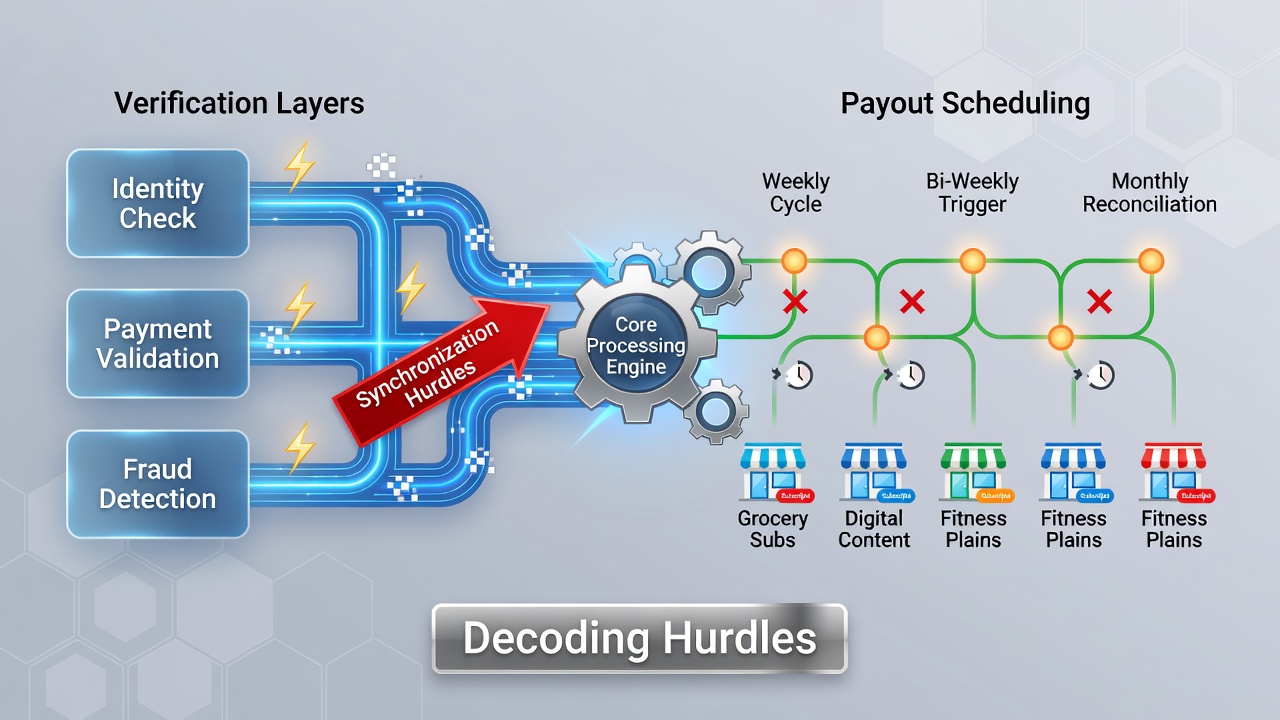
Decoding Synchronization Hurdles Between Verification Layers and Payout Scheduling Across Subscription-Based Retail Networks
Subscription-based retail networks rely on recurring billing cycles that demand precise alignment between identity verification processes and scheduled fund transfers, yet mismatches often emerge when verification layers update slower than payout calendars. Retailers operating these models must handle customer data checks at onboarding stages while ensuring payouts to vendors or partners occur on fixed intervals, which creates friction points when systems fail to sync. Data from the Bank for International Settlements indicates that payment infrastructures in major economies processed over 450 billion retail transactions in 2025, with subscription services accounting for roughly 18 percent of recurring volumes across North America and Europe.
Core Components of Verification Layers
Verification layers typically encompass multi-stage checks including document validation, biometric matching, and real-time database queries against regulatory watchlists, all of which feed into merchant risk profiles before any funds move. In subscription environments these checks repeat at renewal points or when account details change, yet the timing rarely aligns with monthly or quarterly payout schedules that retailers set for suppliers. Observers note that European Central Bank reports on payment services highlight how automated verification tools reduced average processing times to under four seconds per transaction in 2025, but legacy batch systems still dominate payout releases and create gaps that extend up to 72 hours.
Payout Scheduling Mechanics
Payout scheduling follows contractual calendars tied to revenue collection dates, inventory cycles, and settlement windows with acquiring banks, which means any delay in upstream verification directly postpones downstream transfers. Subscription networks often aggregate payments across thousands of users before releasing net amounts to partners, so a single verification hold on one high-value account can ripple through an entire batch. Researchers at academic institutions studying retail payment flows have documented cases where mismatched timestamps between verification completion and payout triggers led to 12 percent of monthly settlements missing their intended dates in multi-vendor platforms during 2025.
Common Synchronization Challenges
Timing discrepancies arise when verification platforms undergo maintenance windows that overlap with payout cutoffs, forcing manual interventions that increase operational costs and introduce human error. Data reconciliation between the two systems also suffers because verification records store in separate databases from payout ledgers, requiring middleware that sometimes drops entries during high-volume periods such as post-holiday subscription surges. One study revealed that networks handling digital goods subscriptions encountered particular issues when regional regulatory updates, including enhanced due diligence rules scheduled for rollout in October 2026 across several Asia-Pacific jurisdictions, altered verification criteria without corresponding adjustments to payout calendars.
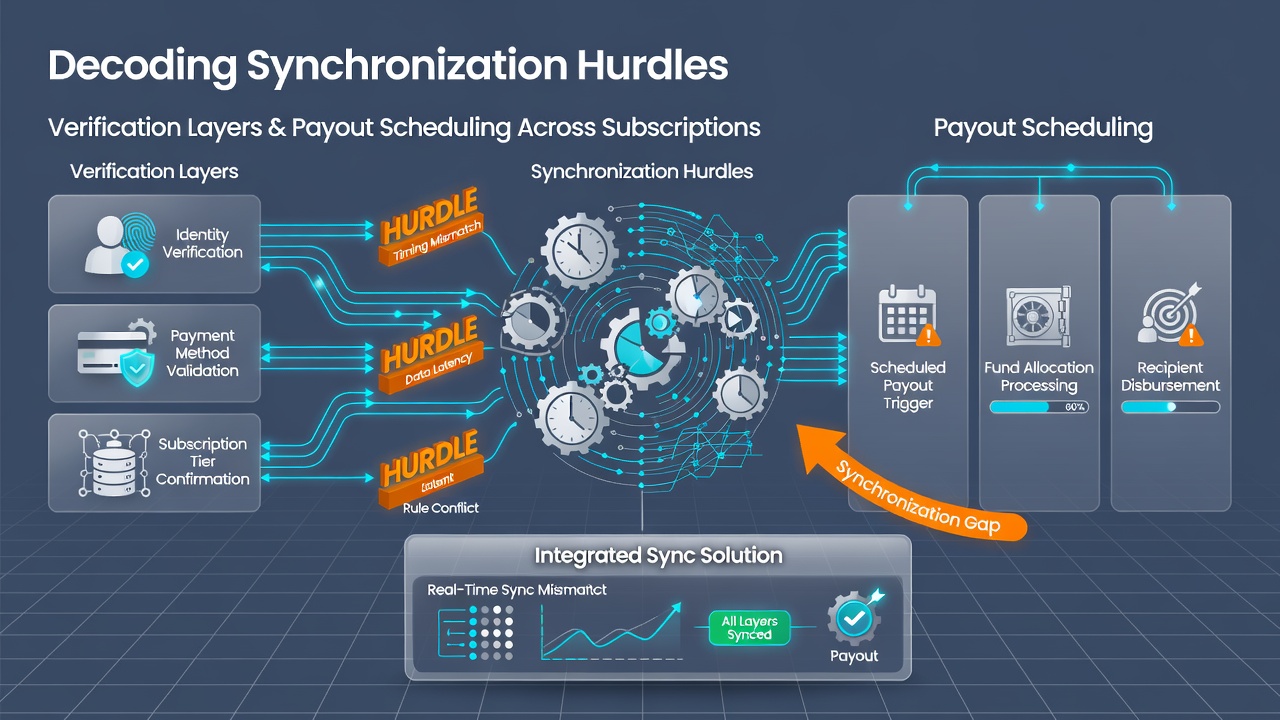
API rate limits on verification services further compound delays when payout engines attempt bulk status pulls near settlement deadlines, resulting in throttled responses that push transfers into the next business day. Those who manage subscription platforms report that currency conversion layers add another variable because verification often occurs in the customer's local currency while payouts settle in the merchant's base currency, and exchange rate locks must coincide exactly with both processes. Figures from industry analyses show that unresolved sync issues contributed to an average 2.3 day lag in vendor payouts across examined networks in the first half of 2026.
Impact on Operational Workflows
Retailers respond by building buffer periods into payout schedules, yet these buffers reduce cash flow predictability for partners who depend on timely receipts to manage their own inventory and staffing. Automated reconciliation tools have begun incorporating predictive flags that alert teams when verification completion estimates fall outside payout windows, allowing preemptive rescheduling. But here's the thing: even with such tools, cross-border subscription networks face additional hurdles because verification requirements differ by jurisdiction while payout rails follow standardized settlement calendars set by card networks and banking associations. A case where experts tracked a European subscription service showed that aligning UK and EU verification updates with USD-denominated payouts required custom scripting that processed 15 percent of transactions outside automated pathways.
Emerging Technical Approaches
Developers have introduced event-driven architectures that trigger payout evaluations only after verification status reaches confirmed states, reducing idle time in the sequence. Cloud-based orchestration platforms now monitor both systems simultaneously and apply conditional logic to adjust schedules dynamically when verification backlogs appear. Research indicates that networks adopting these methods cut synchronization failures by nearly 40 percent compared with traditional batch-oriented setups during 2025 test periods.
Conclusion
Subscription retail networks continue to refine connections between verification layers and payout scheduling through improved middleware and standardized data schemas, yet persistent differences in processing speeds and regulatory timelines sustain occasional mismatches. Observers note that ongoing infrastructure upgrades, combined with clearer coordination between payment processors and compliance platforms, offer pathways to tighter alignment as transaction volumes grow through the remainder of 2026 and beyond.