Tracing the Influence of Gateway API Configurations on Hidden Cost Variations in Global Credit Card Settlements
Written by Clara Koch · Sep 22, 2026
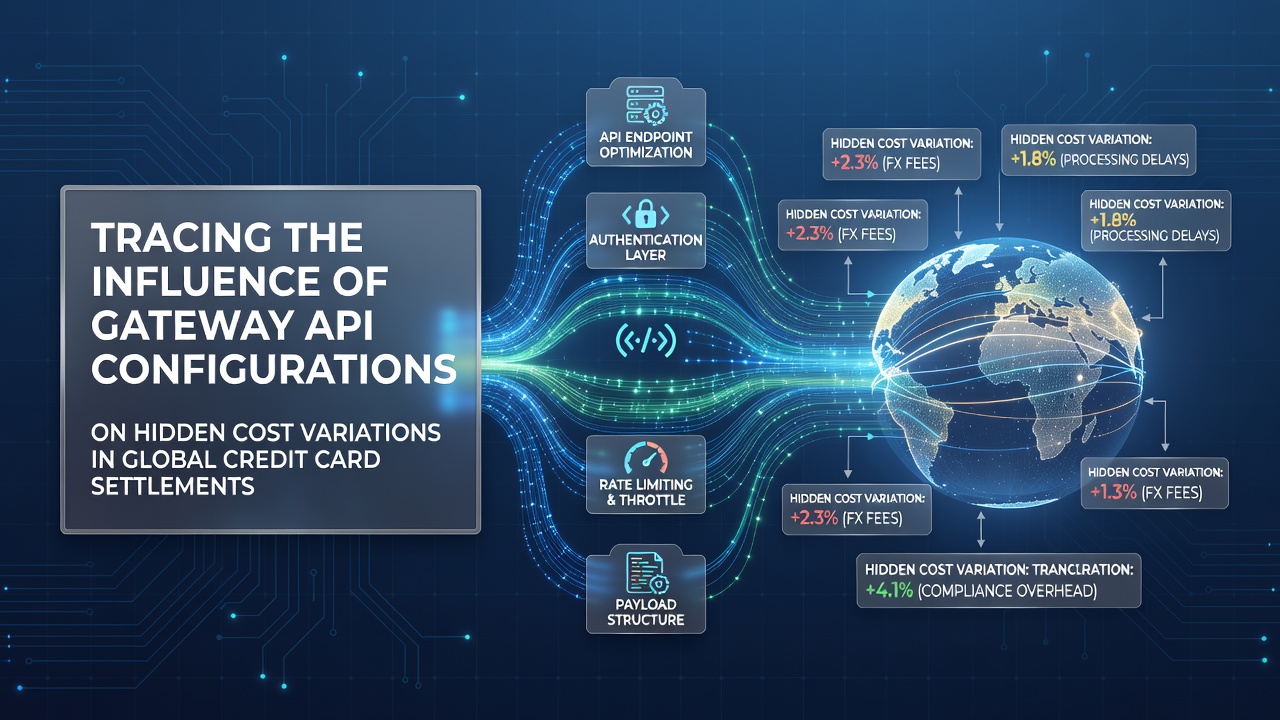
Tracing the Influence of Gateway API Configurations on Hidden Cost Variations in Global Credit Card Settlements
Payment gateway API configurations determine how transaction data routes through processors, acquirers, and card networks before funds reach merchant accounts, and these settings directly affect fee calculations in ways that often remain invisible until settlement statements arrive. Configuration choices around endpoint selection, retry logic, and currency handling create measurable differences in costs that accumulate across high-volume operations.
Core Elements of API Configurations
Gateway APIs expose parameters for authentication methods, request formatting, and response handling that control transaction flow timing and routing paths, while settings for timeout thresholds and fallback mechanisms influence whether a transaction processes through primary or secondary channels. Data from the Federal Reserve shows that variations in these parameters correlate with differences in interchange and network fees across domestic and cross-border volumes. Observers note that merchants who adjust API retry intervals report shifts in authorization success rates that alter the proportion of transactions subject to premium routing fees.
Endpoint selection within API setups determines which acquiring bank or processor handles initial authorization, and this choice affects downstream settlement costs because different partners apply distinct pricing schedules for currency conversion and batch processing. Researchers at the Bank for International Settlements have documented how specific API header configurations trigger alternative fee tiers in multi-currency environments, particularly when merchants operate across multiple time zones.
Settlement Timing and Fee Accumulation
API configurations that control batch submission schedules interact with network cut-off times to determine when funds move from issuer to acquirer, and delays introduced by certain retry or validation settings extend the period during which currency fluctuation risks apply. Figures released by the European Central Bank indicate that settlement delays exceeding standard windows increase exposure to foreign exchange spreads that processors pass through as additional line items. Those who monitor these patterns find that small adjustments to API polling frequencies can shift settlement batches into lower-cost windows without changing the underlying transaction volume.
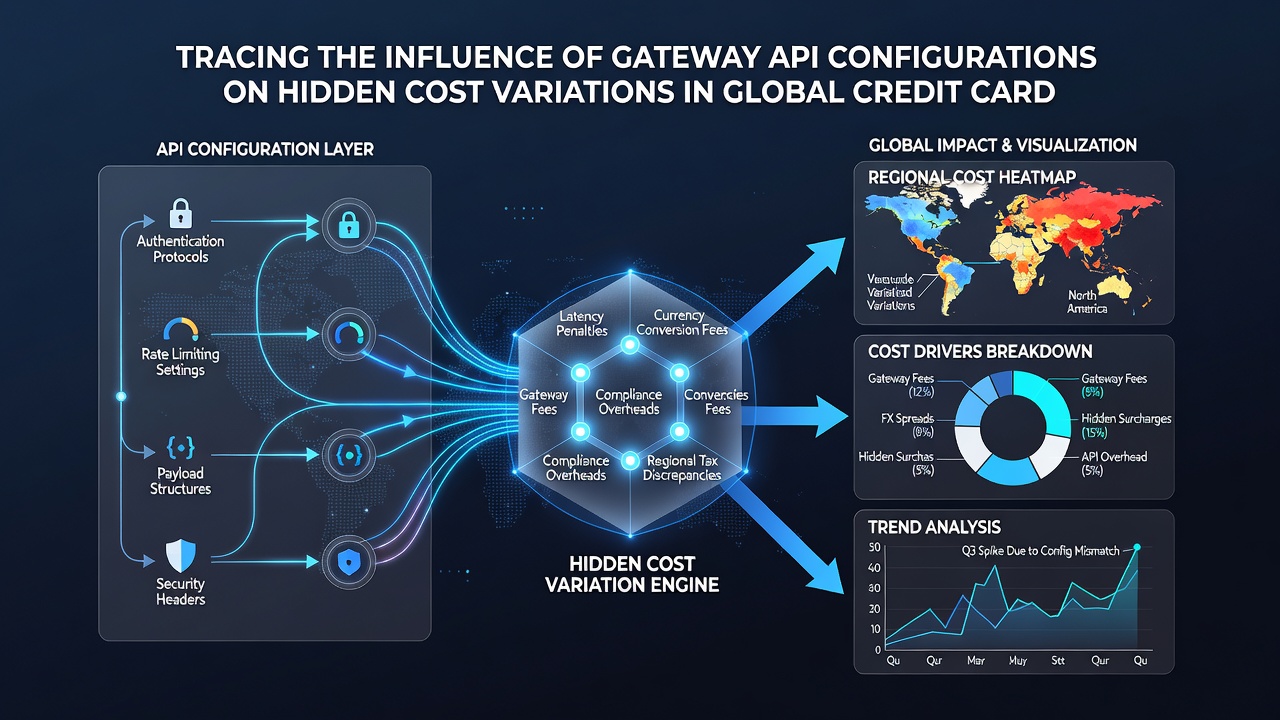
Regional Routing and Compliance Layers
Global credit card settlements involve different regulatory frameworks that API configurations must accommodate, and settings for data localization or tokenization affect whether transactions incur additional compliance charges in jurisdictions with strict data residency rules. Reports from the Reserve Bank of Australia highlight how API-level decisions on encryption protocols and reporting formats align with or diverge from local requirements, resulting in variable surcharge applications at settlement. Merchants processing in Asia-Pacific and European markets simultaneously encounter compounded effects when a single API configuration routes transactions through gateways that apply divergent compliance markups.
Network rules for address verification and fraud scoring also tie into API request structures, and configurations that omit certain data fields can route transactions into higher-risk categories that carry elevated fees. Studies compiled by the Bank of Canada demonstrate correlations between missing API parameters and increased decline rates that later require manual intervention, adding operational overhead reflected in settlement adjustments.
Hidden Cost Mechanisms
Currency conversion markups embedded in API responses vary by configuration because some gateways default to real-time rates while others apply cached or negotiated rates, and these differences surface only after reconciliation when statements list the applied spreads. Data compiled through September 2026 continues to show that merchants using multi-region gateway setups experience settlement variances traceable to how API endpoints prioritize conversion services. Transaction retry configurations further influence costs when repeated authorization attempts trigger incremental network fees that accumulate before final settlement occurs.
Batch-level reporting options within APIs determine the granularity of fee breakdowns provided at settlement, and limited visibility settings obscure the precise origin of certain charges until manual audits uncover them. Industry analyses from academic sources such as the MIT Sloan School of Management have mapped these patterns across large datasets, revealing consistent links between API parameter choices and the appearance of ancillary fees in global settlement reports.
Conclusion
API configurations in payment gateways shape settlement outcomes through their control over routing, timing, and data handling, and the resulting cost variations become apparent only through systematic review of transaction records and fee statements. Organizations that map these configuration effects across regions gain clearer visibility into the components driving differences in net settlement amounts. Ongoing monitoring of parameter impacts supports more precise cost management within existing network structures.